


Vietnam’s legal framework for greenhouse gas (GHG) inventory and the carbon market has entered a mandatory implementation phase. Regulations issued during 2024–2026 have established a comprehensive foundation for managing emission quotas and operating a domestic carbon exchange.
This marks a significant transition from a preparatory phase to a controlled compliance mechanism.
1. Pilot Allocation of Quotas for Three Key Sectors
Under Decision No. 699/QĐ-BNNMT dated February 27, 2026, the government has allocated GHG emission quotas for the 2025–2026 period to:
-
Thermal power plants
-
Iron and steel production facilities
-
Cement manufacturing facilities
Enterprises in these sectors are required to:
-
Conduct GHG inventories in accordance with prescribed methodologies
-
Comply with the allocated emission quotas
-
Purchase or sell emission quotas or carbon credits in case of deviations
The allocation of quotas marks the beginning of actual compliance, where GHG emissions become a key management factor directly impacting production costs and competitiveness.
2. Inventory Obligations for Other Sectors
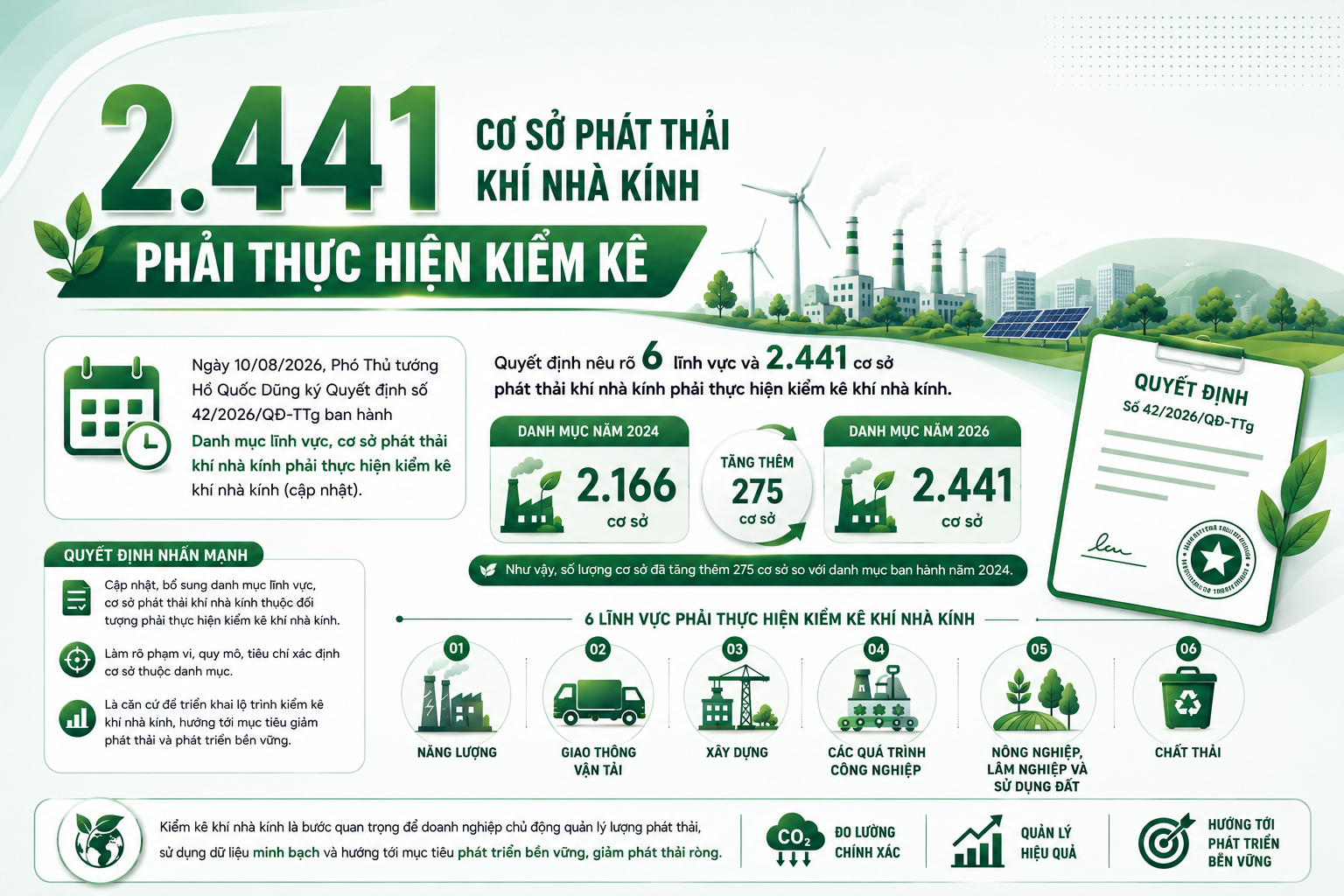
According to Decision No. 13/2024/QĐ-TTg, the updated list of sectors and facilities required to conduct GHG inventories has been issued.
Enterprises included in this list must:
-
Conduct facility-level GHG inventories
-
Submit reports in accordance with Decree No. 06/2022/NĐ-CP and Decree No. 119/2025/NĐ-CP
-
Prepare for the roadmap of emission quota allocation in upcoming phases
Policy trends indicate that expanding the emission quota mechanism to additional sectors is inevitable.
3. Establishment of the Domestic Carbon Market
Alongside quota allocation, the legal framework for Vietnam’s carbon market has been completed, including:
-
Establishment and development of the carbon market
-
Operation of a domestic carbon trading exchange
-
Creation of a national registry system for emission quotas and carbon credits
This provides a formal and transparent mechanism for trading emission quotas.
4. What Should Businesses Prepare?
In this new context, businesses should:
-
Review and standardize emission data systems
-
Assess current emission levels against quota trends
-
Develop medium- and long-term emission reduction plans
-
Establish internal carbon management functions
Early preparation will not only ensure compliance but also help optimize future carbon-related costs.
Role of Consulting Organizations
With experience in GHG inventory implementation and environmental compliance consulting, we support businesses in:
-
Conducting GHG inventories in accordance with regulations
-
Assessing risks of exceeding emission quotas
-
Developing emission reduction roadmaps
-
Advising on strategies for participating in the carbon market
Businesses interested in these services are encouraged to contact us for tailored consultation based on industry and emission scale.
.png)
.png)
